No Polish LLQP Exam in Canada: How Polish Speakers Pass
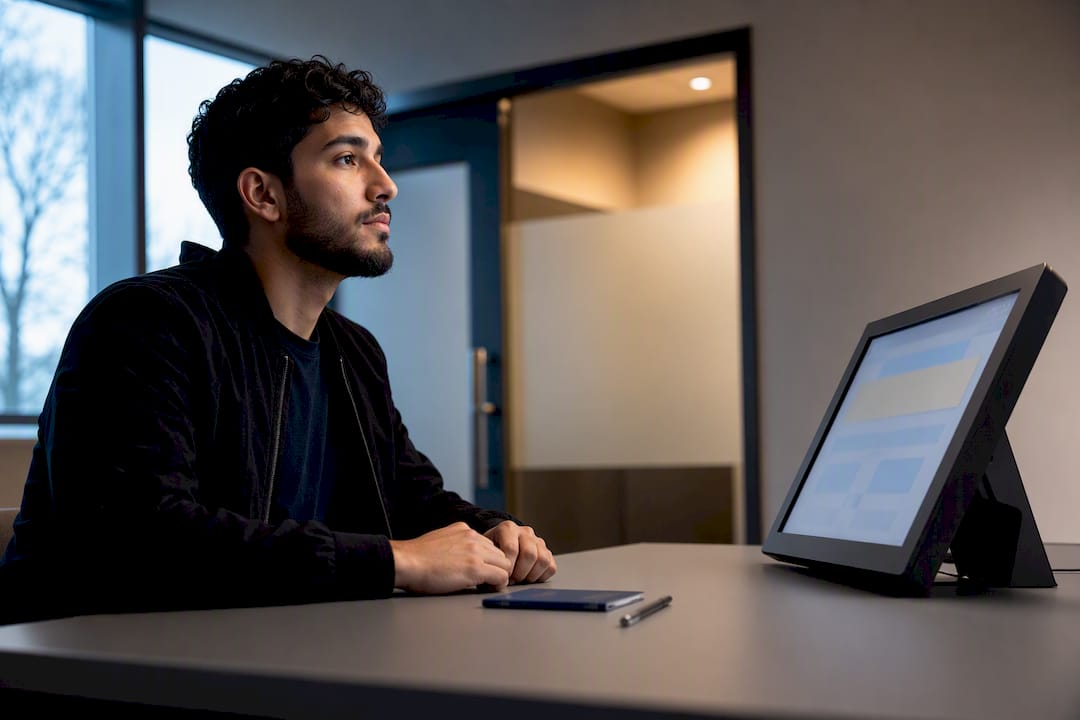
No Polish LLQP Exam in Canada: How Polish Speakers Pass ! Candidate completing Canadian insurance licensing exam No.

No Polish LLQP Exam in Canada: How Polish Speakers Pass
No. The Life Licence Qualification Program exam is offered only in English and French across Canada, and there is no provision to write it in Polish. If Polish is your first language, plan to prepare in English (or French) and lean on translation-supported study tools rather than waiting for a Polish exam option that doesn’t exist.
TL;DR:
- The LLQP exam is only validated in English and French, with no official Polish option available in any province.
- Translation tools focusing on insurance terminology are essential for Polish speakers since vocabulary understanding is the main barrier.
- Structured study plans over six weeks, emphasizing modules like life insurance first and timed mock exams, significantly improve success chances.
- Provincial exam costs vary by jurisdiction, and candidates generally have 12 to 24 months after course completion to sit for the test.
- Most provinces permit multiple attempts, but using diagnostic mocks to identify weak areas before rebooking is crucial to passing.
Table of Contents
- Why isn’t the LLQP exam offered in Polish?
- Polish-friendly resources and study formats that actually help
- How to prepare effectively if your first language is Polish
- Registering and writing the exam: steps and provincial differences
- What it costs and how long it takes
- What happens if you fail a module
- Your next steps as a Polish-speaking candidate in Canada
- Working with Polish-speaking learners
- Study smarter with support built for non-native speakers
- Sources
- FAQ
Why isn’t the LLQP exam offered in Polish?
The answer comes down to how the exam gets built and approved. The Canadian Insurance Services Regulatory Organizations (CISRO) develops and validates every LLQP exam item in English and French only, and that validation process is exhaustive. It involves item writers, translators, and psychometric testing to confirm that a question means the same thing and carries the same difficulty in both official languages.
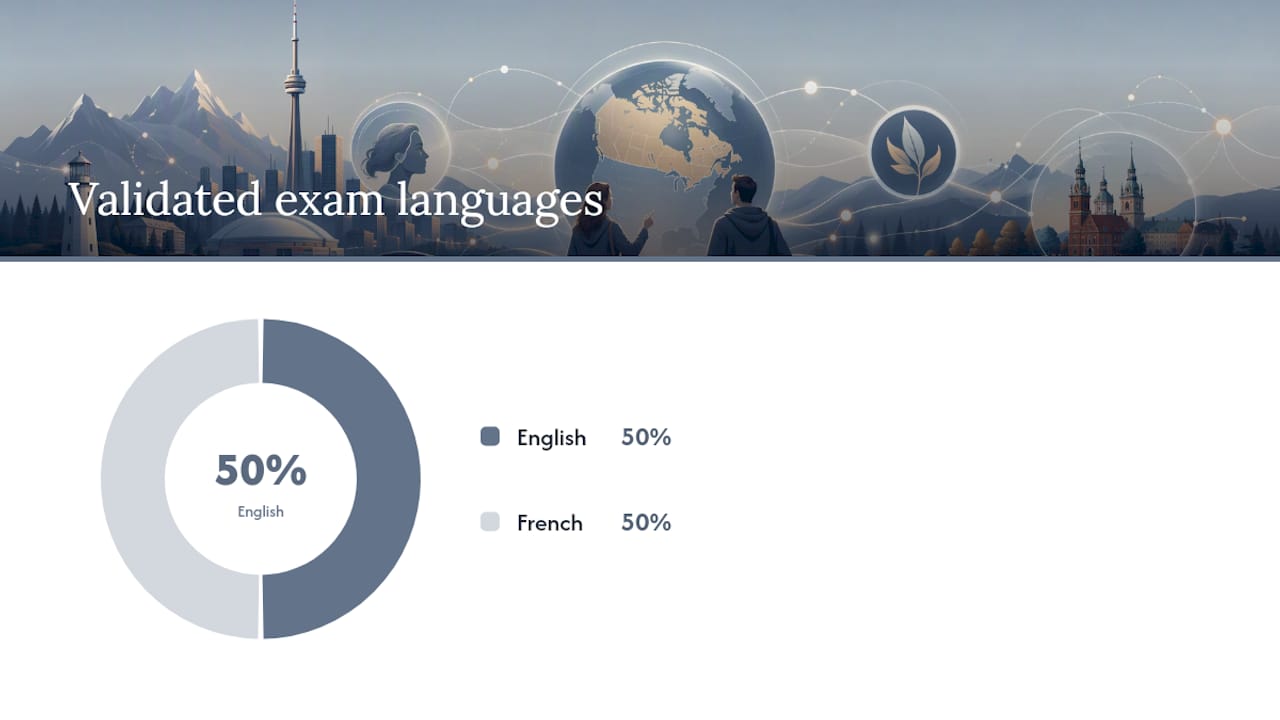
That process was independently checked. A psychometric audit by Yardstick, commissioned by CISRO, reviewed the exam’s item development and translation quality and confirmed the English and French versions hold up as reliable, equivalent tests. No equivalent validation work has ever been done for Polish, or for any language beyond Canada’s two official ones.
There’s also a licensing logic behind it. Provincial regulators expect licensed agents to conduct business, read contracts, and communicate with clients in English or French, so the exam language mirrors the language of the job.
What this means practically:
- The LLQP exam exists in exactly two languages nationwide: English and French.
- No province, including Ontario, British Columbia, or Alberta, offers a Polish version.
- Accommodations for language exist informally in some provinces (extra time, for instance) but they don’t extend to translating the exam itself.
Polish-friendly resources and study formats that actually help
If you can’t write the exam in Polish, the smartest move is closing the terminology gap before test day, not on it. The real barrier for most Polish-speaking candidates isn’t general English fluency. It’s insurance-specific vocabulary: terms like “irrevocable beneficiary,” “incontestability clause,” or “segregated fund guarantee” that don’t have obvious Polish equivalents and rarely come up outside this exam.
That’s a vocabulary problem, and it responds better to context-based tools than to a dictionary. In-lesson translation tools that let you tap a term and see it explained in Polish, right where it appears in a lesson, teach concepts faster than switching between a textbook and Google Translate.
A few formats consistently outperform plain text for non-native speakers:
- Video lessons that narrate concepts aloud, reinforcing pronunciation and context together
- Interactive quizzes that force recall instead of passive rereading
- Full-length mock exams that replicate the pressure and pacing of the real thing
A comprehensive LLQP exam preparation platform builds around exactly this gap, covering all four LLQP modules, with in-lesson word translation across multiple languages, unlimited practice quizzes, and full mock exams built to mirror real exam conditions.
Pro Tip: Don’t translate the whole lesson word for word. Translate just the unfamiliar terms, then read the full English sentence again. That trains your brain to recognize the term in context, which is what the actual exam demands.
How to prepare effectively if your first language is Polish
The LLQP course is roughly 100 hours of material, and how you split that time matters more than how much time you spend overall. A rushed 100 hours in three weeks is worse prep than a paced 100 hours over six, especially when you’re also translating terminology in your head.
Here’s a structure that works for non-native speakers specifically:
- Weeks 1 to 2: Life Insurance module. Build your terminology base here first since most of the language across other modules assumes you already know these terms.
- Weeks 3 to 4: Accident & Sickness, then Segregated Funds & Annuities. Run these back to back since they share regulatory language.
- Week 5: Ethics & Professional Practice. This module is scenario-heavy and reads more like a comprehension test than a memorization test, so save it for when your English fluency has already warmed up.
- Week 6: Timed mock exams only. No new material. Just practice under real exam pacing and conditions.
Keep a running Polish glossary as you go, one column of English terms, one column of your own Polish notes, and review it with active recall (quiz yourself, don’t just reread it) rather than passive rereading. Mock exams that use open-book, tablet-based formats similar to the real thing build the reference-skimming speed you’ll actually need on test day.
Pro Tip: Book your provincial exam for two to three weeks after finishing your course, not the same week. That gap gives you time for a dedicated mock-exam sprint without letting the material go stale.
Check your provincial certificate window before you plan too far out. Most provinces give you 12 to 24 months after course completion to actually sit the exam, so there’s flexibility, but it’s not unlimited.
Registering and writing the exam: steps and provincial differences
Before you can book anything, you need two things: a completed approved LLQP course and a CIPR (Canadian Insurance Participant Registry) number, which most course providers help you set up automatically on completion.
Durham College administers the modular provincial exams for several provinces, and how that plays out varies. Prince Edward Island runs its LLQP exam entirely online through Durham College, with clear eligibility and booking rules on its own regulator page. British Columbia and Alberta follow similar modular formats but set their own booking systems and residency expectations. Some provinces, like Newfoundland and Labrador, layer in additional sponsorship or residency conditions that BC and Ontario don’t require.
Format-wise, expect:
- Four separate modules, each timed independently
- Open-book access via an electronic tablet or reader provided at the test centre
- A pass mark of 60% on each module
- Government-issued photo ID required at check-in, matching your CIPR registration exactly
Book through your province’s designated exam portal, not through Durham College directly in most cases; the province routes you.
What it costs and how long it takes
Two separate bills to budget for: your course fee, set by whichever private provider you choose, and your provincial exam fee, set by the regulator. Course fees vary quite a bit depending on the provider and how much support (video, translation tools, mock exams) is bundled in. Exam fees are set independently and differ by province; a detailed provincial cost breakdown is worth checking before you commit to a timeline.
Plan around:
- Roughly 100 hours of coursework, ideally spread over five to six weeks
- A 12 to 24 month window after course completion to write your provincial exam, depending on your province
- Extra buffer time if you’re studying in a second language, since rushing tends to backfire on retention
What happens if you fail a module
Most provinces allow multiple attempts at each module before candidates must wait a specified period prior to re-attempting. Use a diagnostic mock exam right after a failed attempt to pinpoint exactly which module or topic dragged your score down, then rebook once you’ve closed that specific gap rather than re-studying everything from scratch.
Your next steps as a Polish-speaking candidate in Canada
- Confirm which provincial regulator governs your licence and get your CIPR number sorted early, since some provinces process this faster than others.
- Choose an approved LLQP course provider that actually offers translation support, not just English-only text. This is the single biggest lever for non-native speakers.
- Run timed mock modules in the final two weeks before your exam, then book your provincial sitting while your course certificate is still comfortably within its validity window.
Working with Polish-speaking learners
The candidates who struggle most aren’t behind on English generally. They’re behind on insurance vocabulary specifically, and that’s a fixable, narrow problem, not a broad one. What actually closes the gap is repetition under real exam conditions: mock exams, timed modules, and translation tools used sparingly and strategically. Treat English fluency as separate from exam readiness, and the language disadvantage shrinks fast.
— Reza
Study smarter with support built for non-native speakers
There are other ways to prepare, textbooks, in-person courses, generic English-only apps, but none of them were built with a Polish-speaking candidate’s actual friction points in mind. One platform designed for Polish-speaking candidates includes in-lesson translation tools covering multiple languages across all four LLQP modules, so you’re not stopping to look up terms in a separate tab.
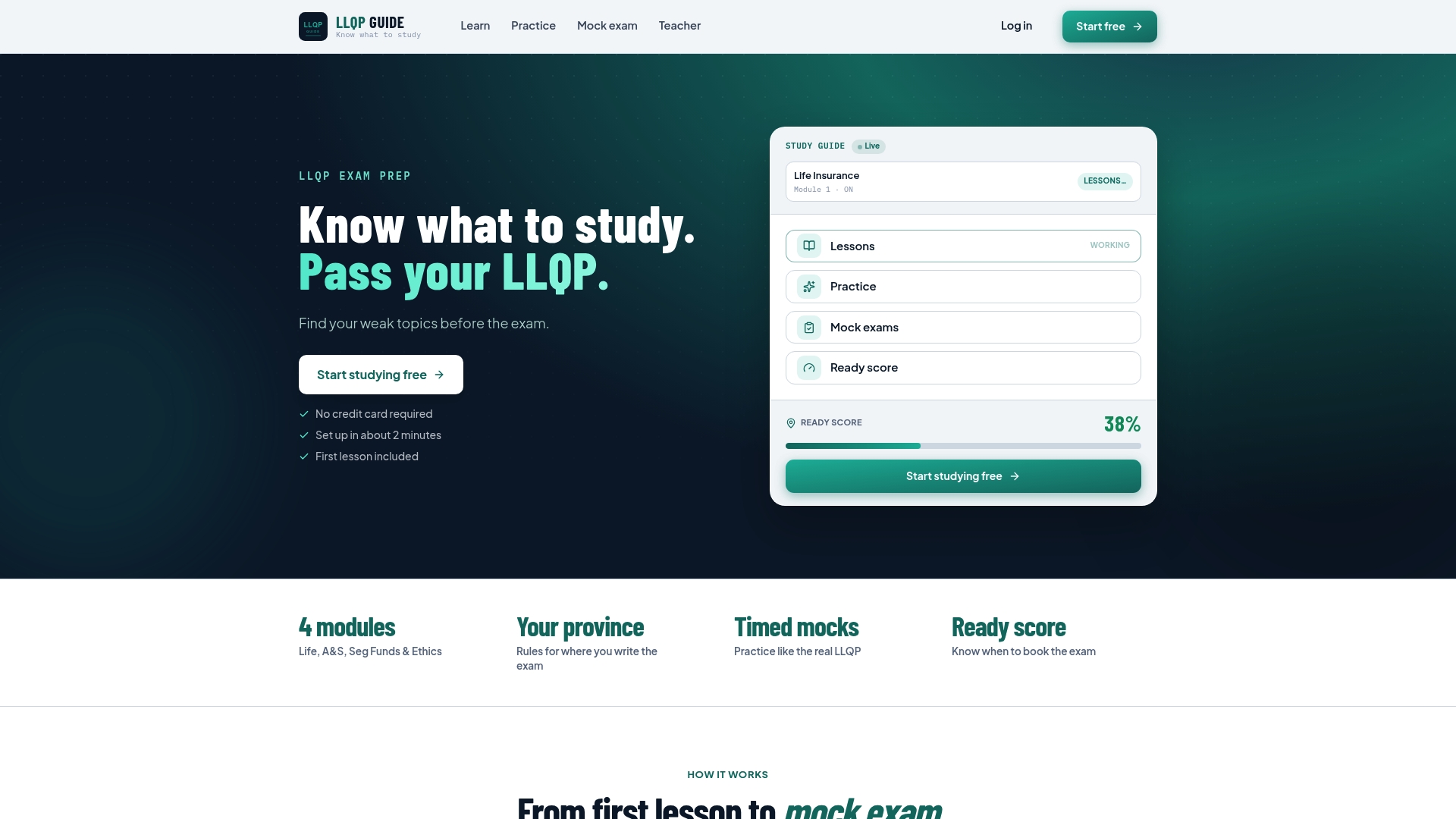
That translation layer sits alongside unlimited practice quizzes and full mock exams built to mirror real exam pacing and open-book conditions, so you walk into your provincial exam already familiar with the format, not just the material. Combine that with province-specific modules, and you’re studying exactly what your regulator will test, nothing extra. Start with the Life Insurance module if you’re building your terminology base first, or browse pricing to see which plan fits your six-week study window.
Sources
- FSRA — Life Licence Qualification Program (LLQP)
- Government of Prince Edward Island — LLQP exam information
- Insurance Council of British Columbia — LLQP exam information
Recommended
Frequently asked questions
How much does the LLQP course cost?
Course fees are set by private providers and vary depending on what's included, so there's no single fixed price. A province-by-province cost breakdown is the most reliable way to budget, since exam fees are set separately by your provincial regulator.
Is it easy to pass the LLQP exam?
It's manageable with structured preparation, but the 60% pass mark across four timed, open-book modules catches candidates who skip mock-exam practice. Non-native English speakers who use translation-supported study tools and timed mocks tend to close that gap effectively.
What happens if I fail my LLQP exam?
Most provinces allow up to three attempts per module before requiring a waiting period of several months. Use a diagnostic mock exam to isolate your weak module before rebooking rather than restudying everything.
How long are LLQP exams?
Each of the four modules is timed separately, with total length varying by province, and all are written open-book on a provided tablet or electronic reader. Check your specific provincial regulator's page for exact module durations before booking.
Can I write the LLQP exam in Polish anywhere in Canada?
No. The exam is validated and offered only in English and French nationwide, with no Polish-language version in any province.