Avoid the One Year Retake: Get Your Licence After LLQP in Canada
Avoid the One Year Retake: Get Your Licence After LLQP in Canada ! Applicant submitting insurance licence documents After you pass your provincial LLQP exams, you need a sponsor, and that sponsor must start your provincial licence application within a year of your pass date or you'll have to re-qualify.

Avoid the One Year Retake: Get Your Licence After LLQP in Canada
After you pass your provincial LLQP exams, you need a sponsor, and that sponsor must start your provincial licence application within a year of your pass date or you’ll have to re-qualify. Along the way, expect a criminal background check, an application fee, and proof of your exam results. Miss the sponsor step and none of the rest matters.
TL;DR:
- Applicants must secure a sponsor within one year of passing the LLQP exams; missing this window requires re-qualifying from scratch.
- Ordering the criminal background check too early or too late can cause delays, as most checks are valid for only 90 days.
- Each province has specific licensing procedures and prerequisites, so candidates should verify rules for their region and not assume uniform requirements.
- Starting sponsor outreach while still studying helps avoid delays, as application processing depends heavily on timing and sequencing.
- Maintaining organized documentation and understanding province-specific rules prevent common pitfalls that lead to application rejections or delays.
Table of Contents
- License after LLQP: your step-by-step application checklist
- Provincial differences that catch candidates off guard
- The one-year rule and background-check timing
- Renewal, continuing education, and your first weeks licensed
- Common pitfalls that force a re-qualification
- What I’ve learned watching candidates stall after LLQP
- How LLQPGuide keeps you on the right side of the deadline
- Sources
- FAQ
License after LLQP: your step-by-step application checklist
Passing the LLQP is the easy part compared to what regulators actually require next. You cannot submit a licence application on your own. An insurer or managing general agent (MGA) has to initiate it through the provincial regulator’s portal, which means finding a sponsor is job one, not an afterthought.
- Line up a sponsor first. Talk to MGAs or insurers before you finish studying. A sponsor reviews your background, agrees to appoint you, and starts your file in the regulator’s licensing portal.
- Gather your documents. You’ll need your LLQP pass confirmation, your CIPR (Canadian Insurance Participant Registry) number, government ID, and proof of errors and omissions (E&O) insurance if your sponsor doesn’t provide it.
- Order your criminal background check at the right time. In Ontario, the FSRA-approved vendor check costs $19.15 and stays valid for 90 days, so ordering it too early just burns the clock.
- Complete your section of the online application. This includes disclosures about past convictions, bankruptcies, or licence refusals, plus any required attachments and the application fee.
- Let your sponsor submit and pay their portion. They finalize the sponsoring endorsement in the portal, which the regulator needs before it will issue anything.
- Track your file. Ask your sponsor for a status update every couple of weeks rather than assuming silence means progress.
A licensed brokerage or MGA that’s onboarded new agents before will move faster than one doing it for the first time, so ask directly about their track record.
Pro Tip: Email your top three MGA contacts the week you write your final LLQP module, not the week after you pass. Sponsors often have their own onboarding queues, and getting on the list early shaves days off your total timeline.
Provincial differences that catch candidates off guard
Licensing runs through your province’s regulator, and the paperwork isn’t identical everywhere.
- Ontario: FSRA requires sponsorship and processes applications through its Licensing Link portal; the background check runs through an approved vendor at $19.15, valid for 90 days.
- British Columbia: The Insurance Council of BC requires a CIPR number, confirmation your harmonized LLQP course is complete, and, for many applicants, the Insurance Council Rules Course before licensing.
- Alberta: The Alberta Insurance Council logs your course certification directly to your CIPR profile, and that certification is generally valid for one year before you write your exam.
- Other provinces: Check your own regulator’s site directly. Rules on sponsorship, corporate registration, and course prerequisites vary enough that assuming Ontario’s process applies elsewhere is a common, avoidable mistake.
The one-year rule and background-check timing
Your 12-month clock starts the day you first pass your provincial LLQP exams, not the day you finish your course. That distinction trips up more candidates than any other part of the process.
FSRA is explicit that anyone who applies more than a year after their pass date has to re-qualify from scratch, meaning a repeat of coursework and exams. Layer onto that the 90-day validity window on most background checks, and you get a narrow scheduling problem: order the check too early and it expires before your sponsor submits; order it too late and it delays everything.
Processing times vary by province and by how complete your file is on first submission. If a few weeks pass with no movement, contact your sponsor before contacting the regulator. They’re usually the ones holding the file.
Renewal, continuing education, and your first weeks licensed
Getting licensed isn’t the finish line. Ontario licensees renew every two years and must complete continuing education (CE) credits within that window, commonly cited around 30 CE credits over the two-year period. Keep your CE certificates on file for several years in case of a regulator audit.
In your first weeks with an active licence:
- Confirm your E&O insurance is active and meets your province’s minimum coverage.
- Set up a simple record-keeping system for client files, disclosures, and CE certificates from day one.
- If you’re operating as a sole proprietor or through a corporation, check whether your province requires separate corporate or nominee registration, since BC and others have specific rules here.
Common pitfalls that force a re-qualification
Most delays and rejections trace back to a handful of preventable mistakes.
- Missing the one-year window. Applying late means starting the LLQP course and exams over again.
- Letting your licence lapse for two years. Some provinces, including New Brunswick, require candidates to retake the course and exam if they haven’t held an active licence in that period.
- Ordering your background check too soon. A 90-day expiry means a check ordered in month two of your application window could be stale before your sponsor files.
- Submitting incomplete paperwork. Missing signatures, unpaid fees, or unattached documents are the most common reasons files sit unprocessed.
- Skipping province-specific prerequisites. BC’s Rules Course requirement, for example, catches candidates who assume their LLQP completion alone is sufficient.
Pro Tip: Build a single folder, physical or digital, with your pass confirmation, CIPR number, ID, and E&O proof the day you pass your exams. Handing your sponsor a complete package instead of a partial one is often the difference between a submission this week and one three weeks from now.
What I’ve learned watching candidates stall after LLQP
The biggest gap between candidates who get licensed quickly and those who don’t has anything to do with exam scores. It’s timing discipline. People treat the one-year rule as a soft guideline, and it isn’t. FSRA and other regulators enforce it literally: pass date to application date, full stop.
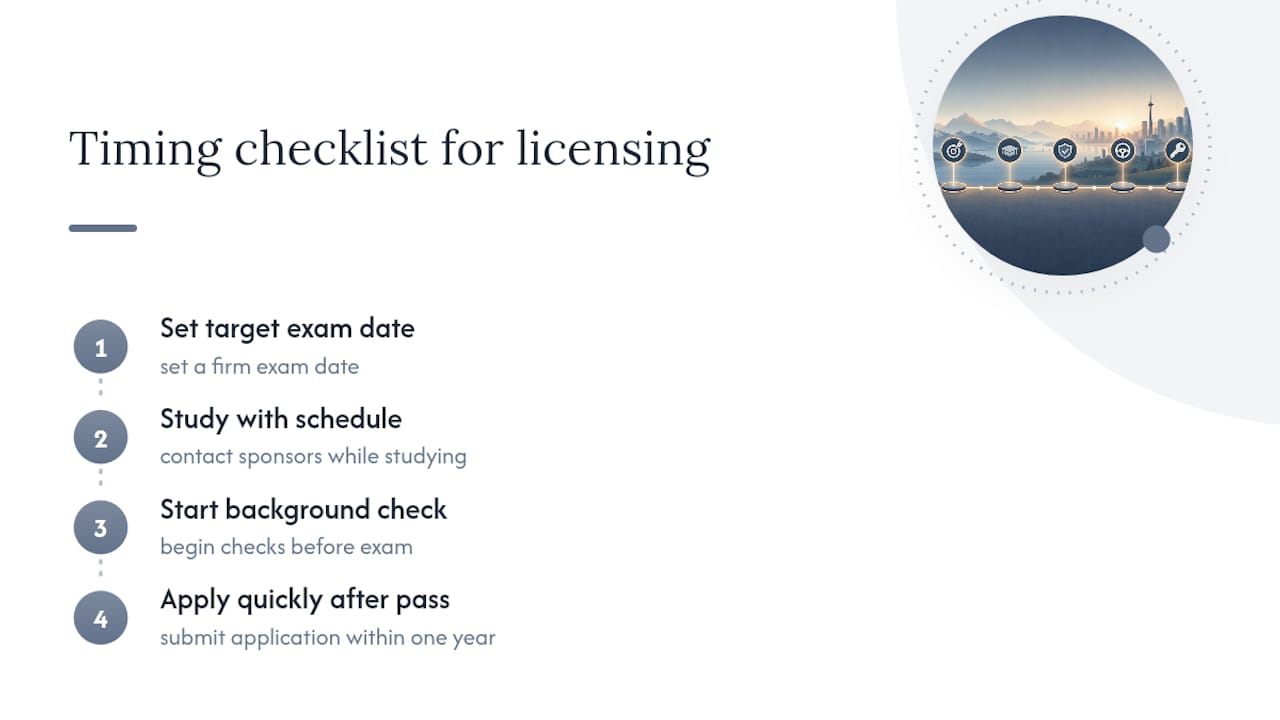
The second pattern I’d flag is sponsor outreach happening too late. Candidates spend months on study and leave sponsor conversations for after they’ve passed, which adds weeks to a process that already has its own bottlenecks. Start those conversations while you’re still studying. A structured study plan that tells you exactly when you’re likely to sit your exam gives you a real date to work backward from, so you can time your background check and sponsor outreach instead of scrambling once results land.
None of this is complicated. It’s just sequencing, and sequencing is exactly what candidates skip when they’re relieved to be done studying.
— Reza
How LLQPGuide keeps you on the right side of the deadline
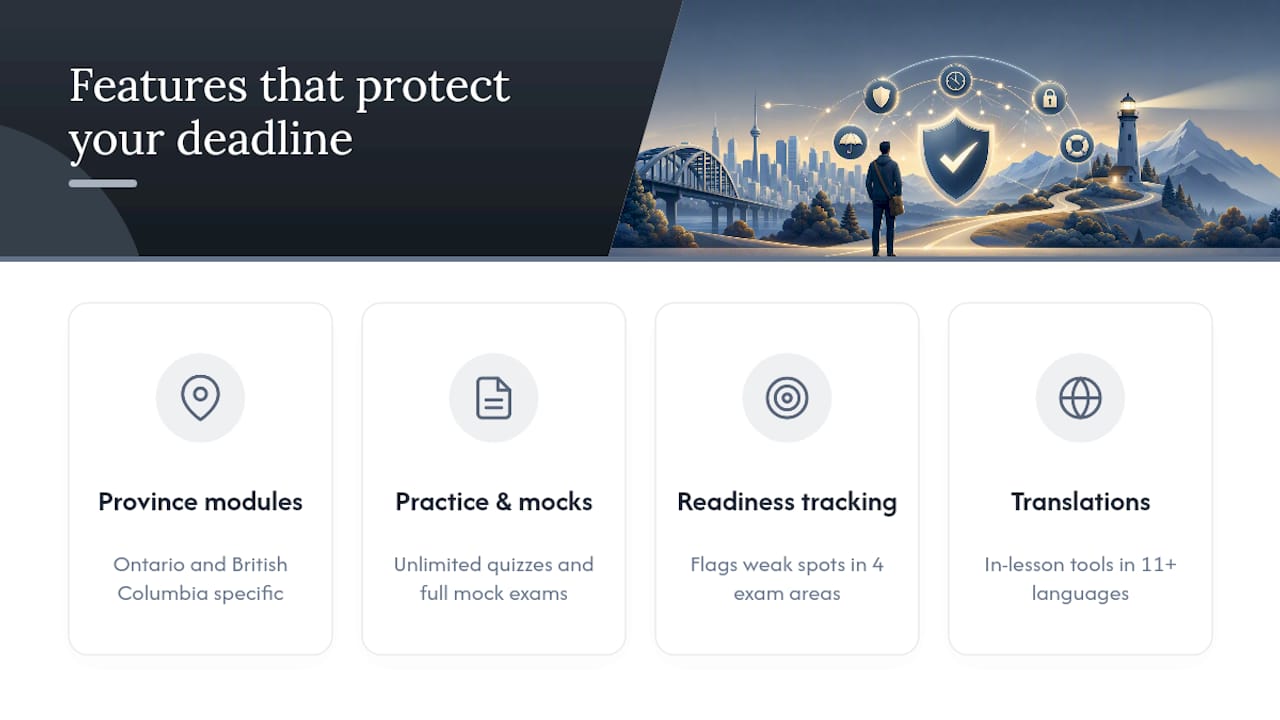
Passing on your first attempt is the single best thing you can do to protect your one-year window, since every rewrite eats into the time you have left to find a sponsor and file your application. LLQPGuide is built around that reality: province-specific modules for Ontario and British Columbia, unlimited practice quizzes, and full mock exams that mirror real testing conditions so you walk in ready.
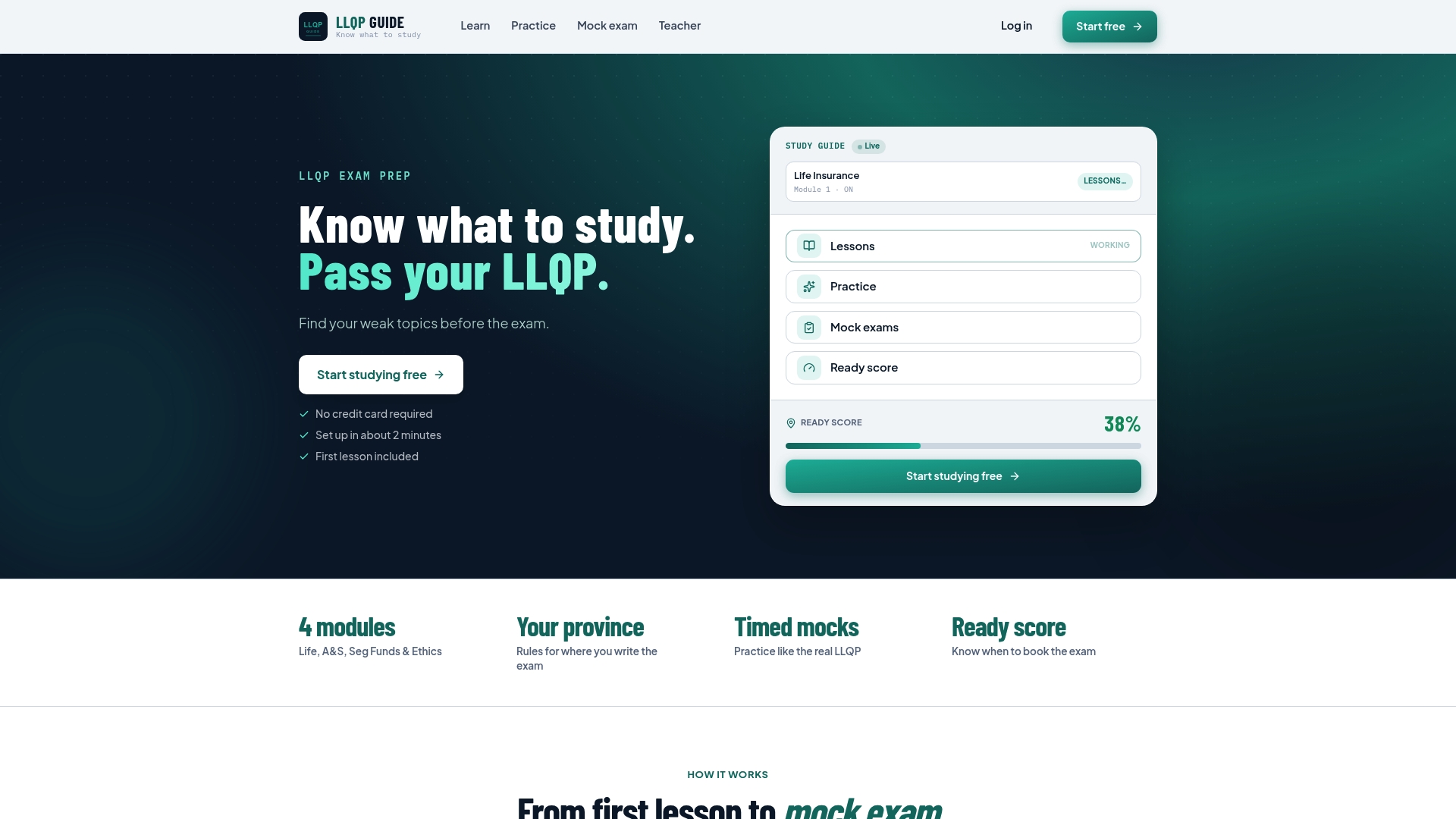
Readiness tracking flags your weak spots in Life Insurance, Accident & Sickness, Segregated Funds & Annuities, and Ethics & Professional Practice before test day, and in-lesson translation tools in 11+ languages help candidates who are studying in a second language get through dense regulatory content without losing time. Fewer rewrites mean more runway to line up a sponsor and assemble your documents well inside the 12-month clock.
Start with a free trial, then check the pricing page for a plan that matches your exam date, and get moving on your province’s module today.
This article is general information, not a substitute for advice from a qualified lawyer. Consult a qualified legal professional about your own circumstances before acting on anything here.
Sources
- Apply for a new life and accident & sickness insurance licence | Financial Services Regulatory Authority of Ontario
- LLQP | Insurance Council of British Columbia
- Life license qualification program (LLQP) | Alberta Insurance Council
Recommended
Frequently asked questions
What should I do right after passing the LLQP?
Start contacting MGAs or insurers about sponsorship immediately, since they must initiate your provincial licence application and you have 12 months from your pass date to get it filed.
How long does it take to finish the LLQP?
Study time varies widely, but most candidates spend several weeks to a few months preparing across all four modules before sitting their provincial exams.
Is an LLQP licence worth it?
For anyone planning a career selling life, accident, or sickness insurance in Canada, the LLQP is a mandatory step, and completing it opens the door to sponsored licensing and commission-based income.
What is the average salary for a licensed life insurance agent in Ontario?
Earnings depend heavily on commission structure, book of business, and whether you're salaried or self-employed, so there's no single reliable average figure across the industry.
Do I need to retake the LLQP if I miss the one-year deadline?
Yes. If you apply for your licence more than 12 months after your provincial exam pass date, most regulators, including FSRA, require you to re-qualify by retaking the course and exams.